


Four days from now, on March 4th, Apple will take the stage at its Cupertino campus for its first “Special Experience” media event of 2026, expected to unveil at least five new products. The spotlight will fall on the M5 MacBook Air, the budget-friendly iPhone 17e, and a refreshed Mac Studio lineup. It will be a polished, masterfully choreographed hardware spectacle.
But once you work through every spec sheet and supply chain leak, the same uncomfortable question keeps surfacing: What exactly is Apple’s AI strategy — and why does it keep falling behind?
March 4th: Five Products, One Narrative
Based on Bloomberg’s Mark Gurman and corroborating supply chain intelligence, the product lineup is largely locked in:
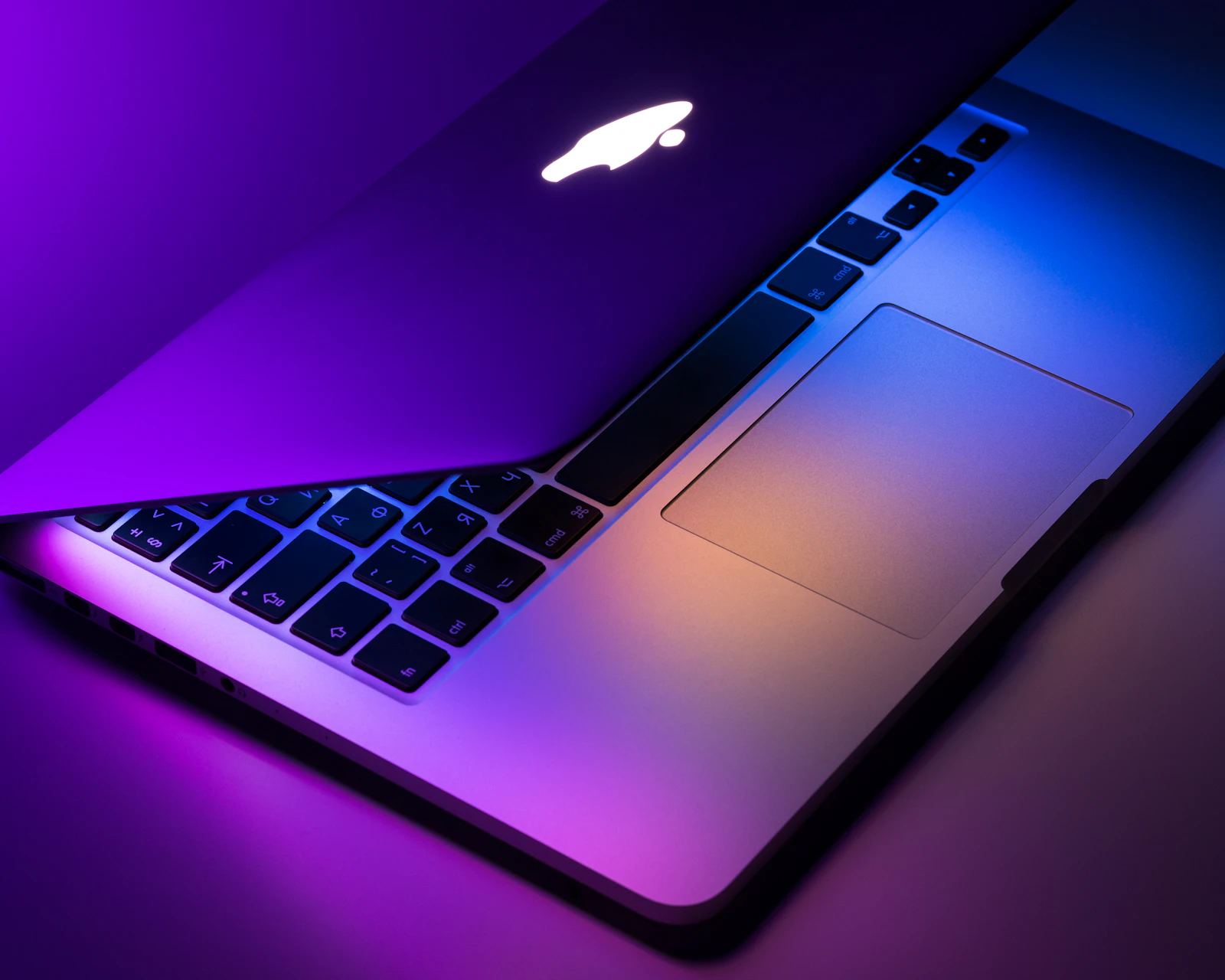
M5 MacBook Air (13-inch + 15-inch): Apple’s most popular Mac line gets its annual silicon refresh. The M5 chip delivers meaningfully higher CPU/GPU throughput within the same fanless, aluminum chassis. Notably, the OLED display upgrade won’t arrive until 2028.
iPhone 17e: Priced at $599, powered by the A19 chip, upgraded from a notch to Apple’s Dynamic Island, first-ever MagSafe wireless charging on an entry-level iPhone, front camera jumping from 12MP to 18MP, and a 4,005 mAh battery.
MacBook Pro M5 Pro / Max: 14-inch and 16-inch pro configurations targeting creative professionals.
M5 Mac Studio: Featuring the M5 Max and a brand-new M5 Ultra chip, positioning itself as the definitive high-performance desktop workstation.
The product logic is coherent: execute a full M5 generational update, widen the performance gap against Windows competitors, and use the iPhone 17e to defend the $599 mass-market entry point against Samsung’s Galaxy A series and Google’s Pixel 9a.
The Siri That Keeps Not Arriving
But the most consequential story at any Apple event in 2026 is the one that won’t be announced: the genuinely intelligent, personalized Siri.
Apple first unveiled its vision for a next-generation Siri at WWDC 2024 — a deeply personal AI assistant that could execute complex, cross-app tasks, understand personal context across Mail, Calendar, Notes, and Messages, and go head-to-head with ChatGPT in practical utility. That was 21 months ago. Since then, the feature has missed three consecutive internal deadlines:
Late 2024 → “Coming sometime in 2025”.
WWDC 2025 → SVP Craig Federighi: “We’ll announce a date when we’re ready”.
February 2026 (CNET / Bloomberg) → Internal testing still “falling short of bar”; earliest realistic window is iOS 26.4 (May or September), with the full overhaul potentially pushed to iOS 27 — meaning 2027.
Apple’s official line is: “We won’t ship something that isn’t ready.” In 2024, that statement carried authority. In 2026, it is beginning to sound less like a quality standard and more like a narrative in need of retirement.
$14 Billion vs. $700 Billion: Apple’s Deliberately Lean AI Bet
Apple’s AI-related capital expenditure (CapEx) for fiscal 2026 runs approximately $14 billion. The contrast with its peers is stark:
Amazon: ~$200B.
Google: ~$175–185B.
Meta: ~$115–135B.
Microsoft: ~$145B.
Combined, the four biggest AI spenders are committing close to $700 billion this year. Apple’s figure represents roughly 2% of that total.
Apple’s counter-argument is architecturally deliberate. Rather than building its own foundation models from scratch, Apple pays roughly $1 billion annually to license Google’s Gemini models and integrates them into Apple Intelligence. Simultaneously, it leverages the extraordinary on-device inference (local AI processing) power of the M-series and A-series chips to keep sensitive computations off the cloud entirely — preserving user privacy while avoiding massive data center fixed costs.
The historical parallel Apple is betting on: the railroad era and the internet era both proved that the companies with the heaviest infrastructure investment weren’t always the ones who captured the most value. Apple is positioning itself as the travel agency selling tickets on someone else’s railroad — as long as the ticket itself is worth buying.
Visual Intelligence: Tim Cook’s Next “iPhone Moment”
When pressed on Apple’s AI narrative, CEO Tim Cook consistently returns to one phrase: Visual Intelligence — the ability of an AI system to understand and interact with the physical world through a camera lens in real time.
According to Bloomberg’s February 22nd report, Apple is simultaneously developing three AI wearable devices:
AI Smart Glasses: Direct competitor to Meta Ray-Bans. Internal prototypes are already circulating within Apple’s hardware team. Mass production target: December 2026. Consumer availability: 2027.
Camera-equipped AirPods Pro: Expected within 2026, enabling Siri to “see” the user’s immediate environment and respond contextually.
AI Pendant/Pin: Early-stage R&D, cancellation risk remains elevated; if greenlit, earliest launch is 2027.
All three devices share the same underlying thesis: embed cameras and microphones into everyday wearables and transform Siri from a smartphone-bound text assistant into a continuously perceptive, real-world AI companion. Cook calls it “the next generation of human-computer interaction.”
The challenge: Meta Ray-Bans have already sold over 2 million units, and Apple’s smart glasses won’t even formally debut until next year.
The Apple AI Paradox: Slowest Mover, Largest Installed Base
This is Apple’s central tension in 2026: hardware remains untouchable; AI software is increasingly playing catch-up.
Google’s Gemini models reach 650 million users. Microsoft Copilot serves 150 million enterprise users. Apple Intelligence, despite being baked into every iPhone 16 and above, faces a core bottleneck: iOS 26 adoption sits at just 50% as of January 2026, and the flagship AI capability — personalized Siri — still doesn’t exist in shipping form.
Yet Morgan Stanley’s latest survey data offers a sharply counterintuitive finding: in the United States, nearly 80% of eligible iPhone users have already downloaded and actively used Apple Intelligence. More strikingly, users express willingness to pay an average of $9.11/month for a premium Apple Intelligence subscription — up 11 percentage points from the same survey in September 2024.
Forbes recently framed the question directly: “Can a $14B AI budget compete in a $700B arms race?” The most honest answer is: it depends entirely on whether Apple’s 1.4 billion iPhone users remain patient enough to wait for the punchline.
On March 4th, Apple will deliver a textbook hardware event — polished, premium, and precisely on-brand. Everyone in the room will applaud the M5 chip’s benchmark scores. And everyone will leave with the same unspoken question still hovering in the air: When does the smart Siri finally show up?